

Lithuania’s preparations for its Presidency of the Council of the EU and its priorities in the field of science were discussed
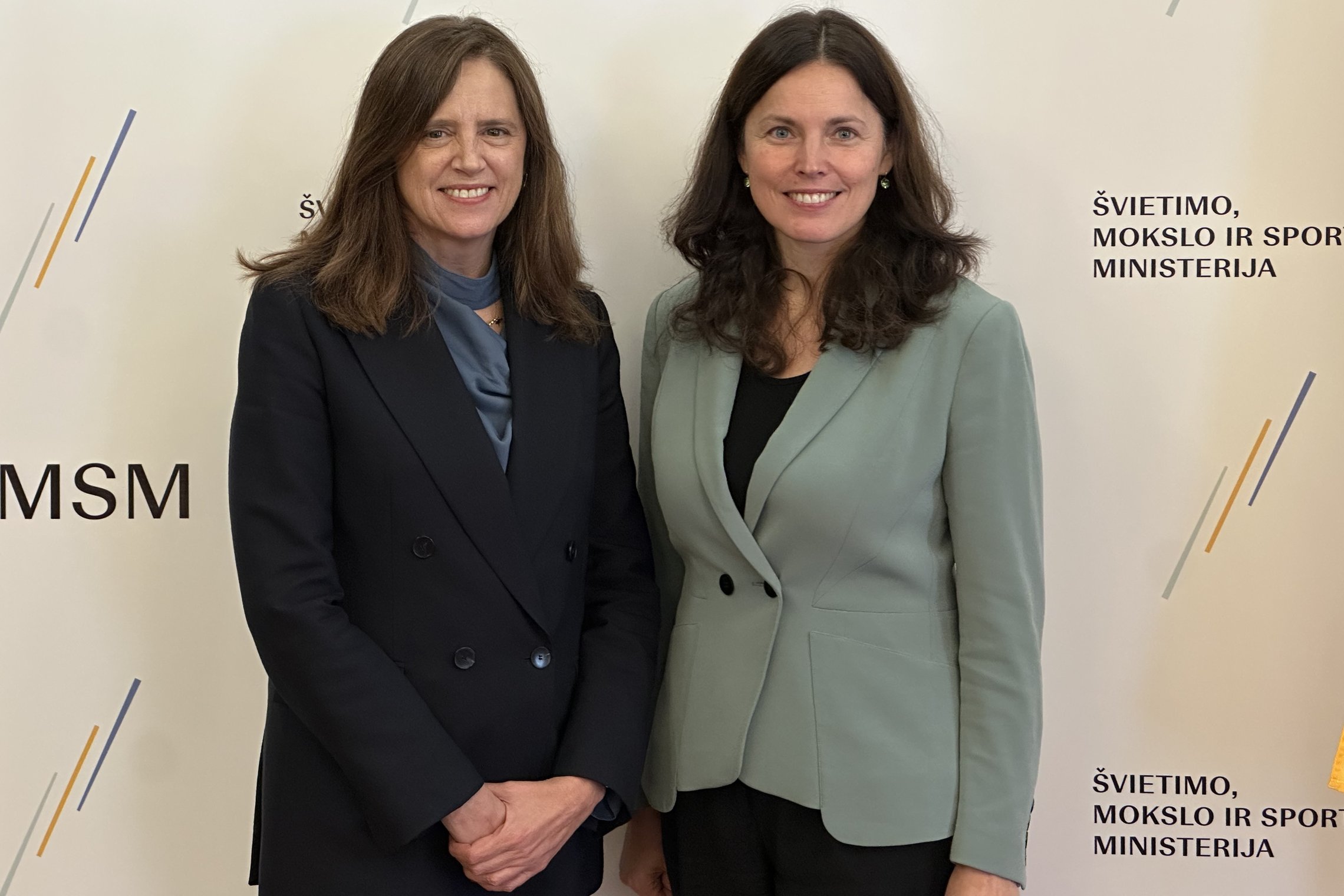
On 5 November, Isabel Riaño, Director-General of the Competitiveness and Trade (COMPET) Directorate at the General Secretariat of the Council of the European Union, visited the Ministry of Education, Science and Sport. During a meeting with Regina Valutytė, Deputy Minister of Education, Science and Sport, and the ministry’s team, Lithuania’s preparations for its Presidency of the Council of the EU and the most important issues on the European research agenda were discussed.
Deputy Minister R. Valutytė emphasized that Lithuania is preparing responsibly for its upcoming Presidency and will strive to serve as a constructive mediator between the member states, the European Commission, and the European Parliament. Lithuania’s goal will be to ensure as much progress as possible in the deliberations on the most important documents related to European research and innovation policy. It is expected that during Lithuania’s presidency, the EU agenda – particularly in the field of research – will be ambitious and will require active involvement from the member states.
As Director-General Isabel Riaño emphasized, the EU attaches the highest priority to competitiveness and research. During Lithuania’s Presidency, important discussions are expected on initiatives such as “One Europe, One Market” and the new-generation EU research and innovation program, “Horizon Europe”.
During the meeting, the organisational and political aspects of Lithuania’s upcoming Presidency of the Council of the EU were also discussed, along with the preliminary agendas for the informal and formal Competitiveness Council meetings (research component) in the first half of 2027, as well as the key legislative proposals scheduled for consideration during Lithuania’s Presidency.
Lithuania’s priorities in the field of research
Among the priorities of Lithuania’s Presidency of the Council of the EU in the field of science is the pursuit of a more competitive and open European Research Area, based on the principle of the fifth freedom. This is the free movement of knowledge, research, and innovation, which should create better conditions for sharing scientific knowledge, data, and ideas among EU member states. The implementation of this principle is important for strengthening Europe’s technological competitiveness and innovation potential.
Lithuania also plans to seek progress in negotiations on future EU research programs and a stronger, researcher-friendly European Research Area. An important goal is to strengthen Europe’s technological competitiveness and capacity for innovation.
Lithuania will hold the Presidency of the Council of the EU starting in January 2027.