

Minister Popovienė highlights the need to strengthen R&D and cooperation between academia and business at the informal EU Competitiveness Council meeting in Dublin
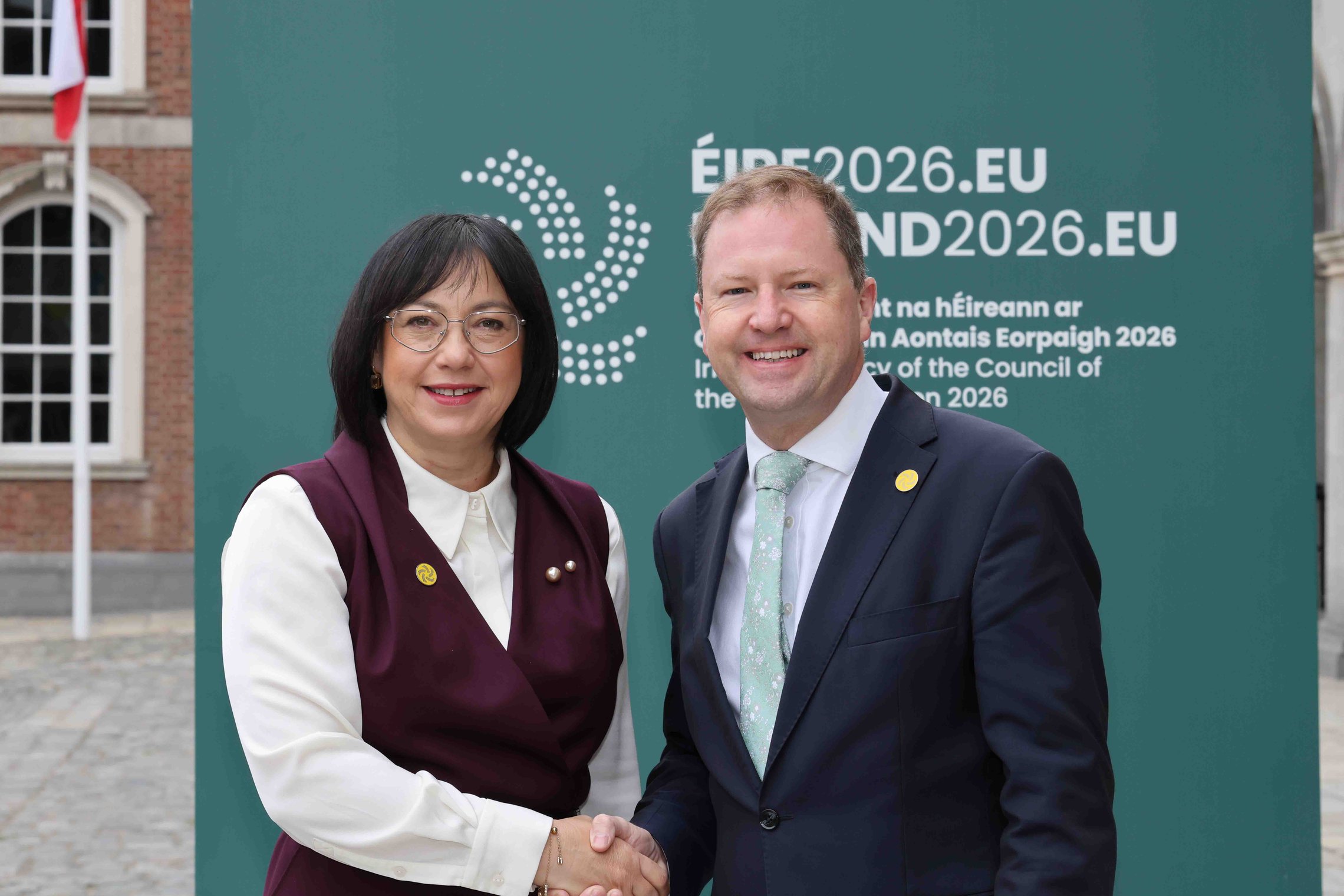
On 21 July, Minister of Education, Science and Sport Raminta Popovienė attended an informal meeting of the EU Competitiveness Council in Dublin, Ireland. EU ministers responsible for research and innovation discussed how to accelerate the free movement of knowledge, research and innovation between member states and how to improve the commercialisation of European research results.
Minister Popovienė stressed the importance of encouraging all EU member states to participate actively in joint programmes such as Horizon Europe, further strengthening academic freedom and deepening cooperation between academia and business.
Ensuring the free movement of knowledge, research and innovation
At the informal Council meeting, ministers discussed the EU policy roadmap ‘One Europe, One Market’. One of its central aims is to create a single, borderless area for knowledge, research and innovation. Discussions focused on the ‘fifth freedom’, intended to facilitate the movement of researchers, knowledge, data and funding between member states and align national and EU research priorities more closely.
The minister said that a stronger European Research Area required better career and employment opportunities for researchers in other EU countries, improved access to research infrastructure and data, less bureaucracy and continued investment in Horizon Europe.
Promoting cooperation between academia and business
EU ministers discussed how to commercialise research successfully, encourage deep-tech companies to establish and grow in Europe, and make better use of the opportunities offered by Horizon Europe and the European Competitiveness Fund.
Lithuania proposed closer cooperation between universities, businesses and investors, increased EU funding for innovative companies — including start-ups and scale-ups — and conditions that would enable them to grow and remain in Europe.
‘For its part, Lithuania is steadily increasing public investment in research and development. This has helped Lithuania become the leading EU country in terms of annual progress in research and innovation,’ the minister said.
Since 2019, Lithuania’s innovation performance has improved by 19.7 percentage points, compared with an EU average of 11.6 percentage points. Only Estonia recorded faster progress over the period, with an increase of 19.8 percentage points.
The informal EU Competitiveness Council meeting was held in Ireland, which has held the Presidency of the Council of the EU since 1 July. Lithuania will assume the Presidency of the Council of the EU on 1 January 2027. It will be the second time Lithuania has held the Presidency of the Council of the European Union.
Last updated: 22-07-2026
Related news:
Lithuania presented the priorities of Lithuania’s Presidency of the European Schools system at CULT