

Minister R. Popovienė: it is important not only to preserve Baltic studies, but also to make them appealing to a new generation of students
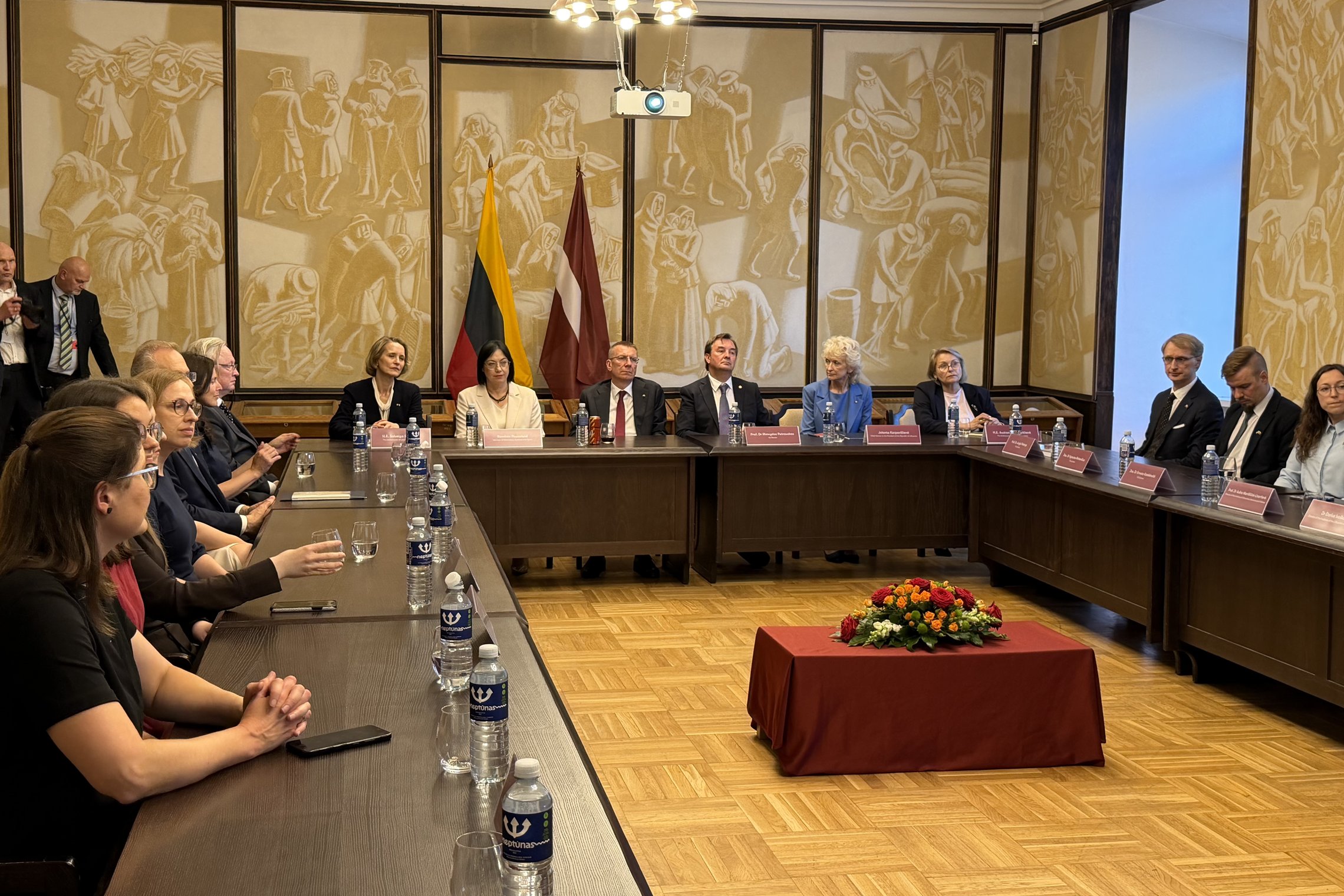
On July 15, Latvian President Edgars Rinkēvičs was visiting Lithuania; he was welcomed at Vilnius University by Raminta Popovienė, Minister of Education, Science, and Sport. During the meeting, cooperation between Lithuania and Latvia in the field of higher education was discussed, and several possible areas of focus were presented: strengthening Baltic studies centres, developing joint study programmes and joint doctoral programmes, and strengthening academic diplomacy.
“Lithuania and Latvia are linked not only by a common history and closely related languages. Baltistics is more than just an academic subject, it is the foundation of our cultural identity and an important tool for international cooperation between Lithuania and Latvia. I am confident that by working together, we can strengthen the global network of Baltic studies, prepare a new generation of researchers, develop international study programmes, and make Baltistics a key area of academic diplomacy for Lithuania and Latvia. This would be an investment in the future of our countries, regional leadership, and a stronger Baltic voice in Europe,” said Minister R. Popovienė.
Lithuania is currently reviewing the funding model for centres of Lithuanian and Baltic studies abroad, as well as the priorities for the activities of the centres. The goal is for these centres to become not only hubs for the Lithuanian language and culture, but also modern academic centres that bring together international networks of scholars and enhance the visibility of Baltic studies across the world.
Latvia is one of Lithuania’s key partners in the field of Lithuanian and Baltic studies. The Lithuanian Studies Centre at the Department of Latvian and Baltic Studies at the University of Latvia is the largest and most active centre for Lithuanian studies in Latvia. Lithuanian studies and research are also being conducted at other higher education institutions in Latvia, in Daugavpils and Rēzekne.
Lithuania and Latvia also cooperate closely in the field of higher education. This year, Vilnius University and the University of Latvia awarded the first master’s degrees under the joint double-degree programme in Baltic studies.
One of the possible forms of future cooperation is joint doctoral programmes between universities in Lithuania and Latvia, which would enable to pool the strongest researchers from both countries, make more effective use of research infrastructure, conduct more ambitious research, and increase international visibility of Lithuanian and Latvian universities, as well as contribute to the continuity of research on the Baltic languages and culture in the future.
The Minister emphasised that Baltic studies could become one of the areas of focus for Lithuania’s and Latvia’s academic diplomacy: both countries could develop partnerships with nations on Europe’s eastern flank and in the Eastern Neighbourhood, and strengthen the voice of the Baltic region in the European science policy.
Last updated: 21-07-2026
Related news:
Lithuania presented the priorities of Lithuania’s Presidency of the European Schools system at CULT