

Over 300 Lithuanian children and teachers living abroad spent their summer getting to know Lithuania and nurturing their mother tongue
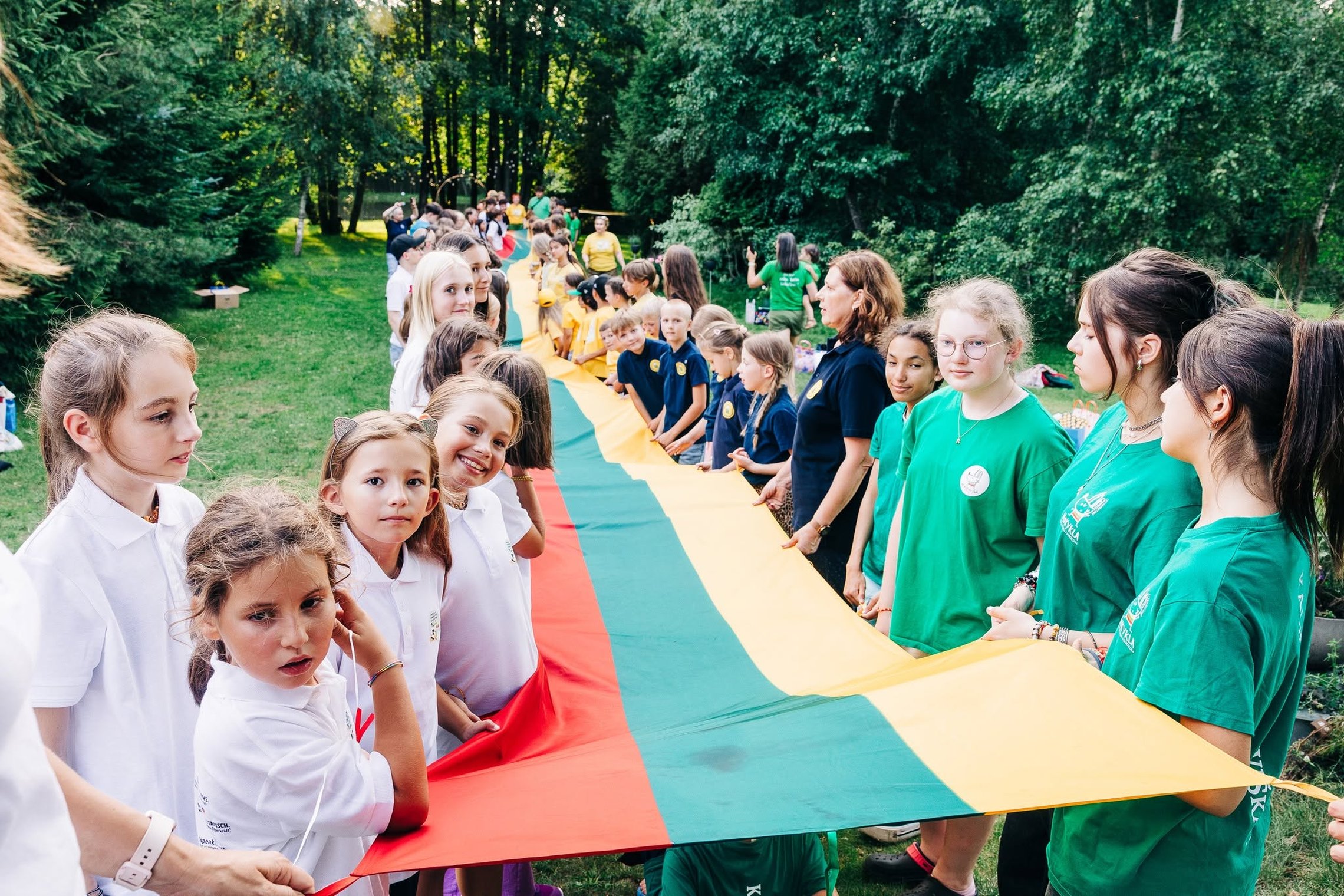
This summer, more than 300 children and young people of Lithuanian descent living abroad, as well as teachers from Lithuanian-language schools, participated in Lithuanian language education camps held in various regions of Lithuania. The annual camps provide an opportunity for compatriots living abroad to strengthen their mother tongue skills and gain a deeper understanding of the country’s culture, history, and current realities.
The Ministry of Education, Science, and Sport provides full or partial funding, through a competitive selection process, for non-formal Lithuanian-language education projects at Lithuanian schools abroad. In 2026, €740 thousand were allocated to 109 education projects. Funds are allocated for the professional development of teachers at Lithuanian-language schools, camps for children and young people, educational/exploration trips, creative workshops, meetings with Lithuanian writers, and other activities that foster Lithuanian identity. Of these funded projects, over €280 thousand euros were allocated to camps organised in Lithuania, with 10 of them for schoolchildren and one for teachers at Lithuanian-language schools.
In July and August, camps were held in Vilnius and the Vilnius District, in Druskininkai, in the Varėna District, and in Rumšiškės. The camps brought together young people from Lithuanian-language schools and formal education schools operating in the United Kingdom, Poland, Germany, Belgium, Ireland, Scotland, Spain, Italy, France, Georgia, and other countries. Some of the camps were also attended by peers from Lithuania and Ukraine. Another group of participants, numbering about 350, gathered at Lithuanian camps in their own countries, i.e. Spain, Italy, the United States, the United Kingdom, Canada, and Georgia. Nearly €27,000 were allocated for these camps.
The camp activities focus on the practical use of the Lithuanian language, learning about traditions, and fostering a sense of community. Participants are involved in creative workshops and field trips to historical sites around the country; children themselves create and present drama plays and musicals to the public. This year, as part of the celebration of the Year of Bishop M. Valančius, the camps devoted considerable attention to the themes of citizenship, freedom, and identity, as well as to the development of young leaders.
Consistent annual government funding for these camps ensures that Lithuanian communities abroad maintain a living connection with Lithuania, and that the younger generation has a space to nurture their mother tongue, national identity, and interconnectivity.
Virtual History / Photo by Jean-Luc Dang
Last updated: 21-08-2026
Related news:
Lithuania presented the priorities of Lithuania’s Presidency of the European Schools system at CULT