

EPAS meeting in Strasbourg: discussions on safe sport, artificial intelligence, and gender equality in sport
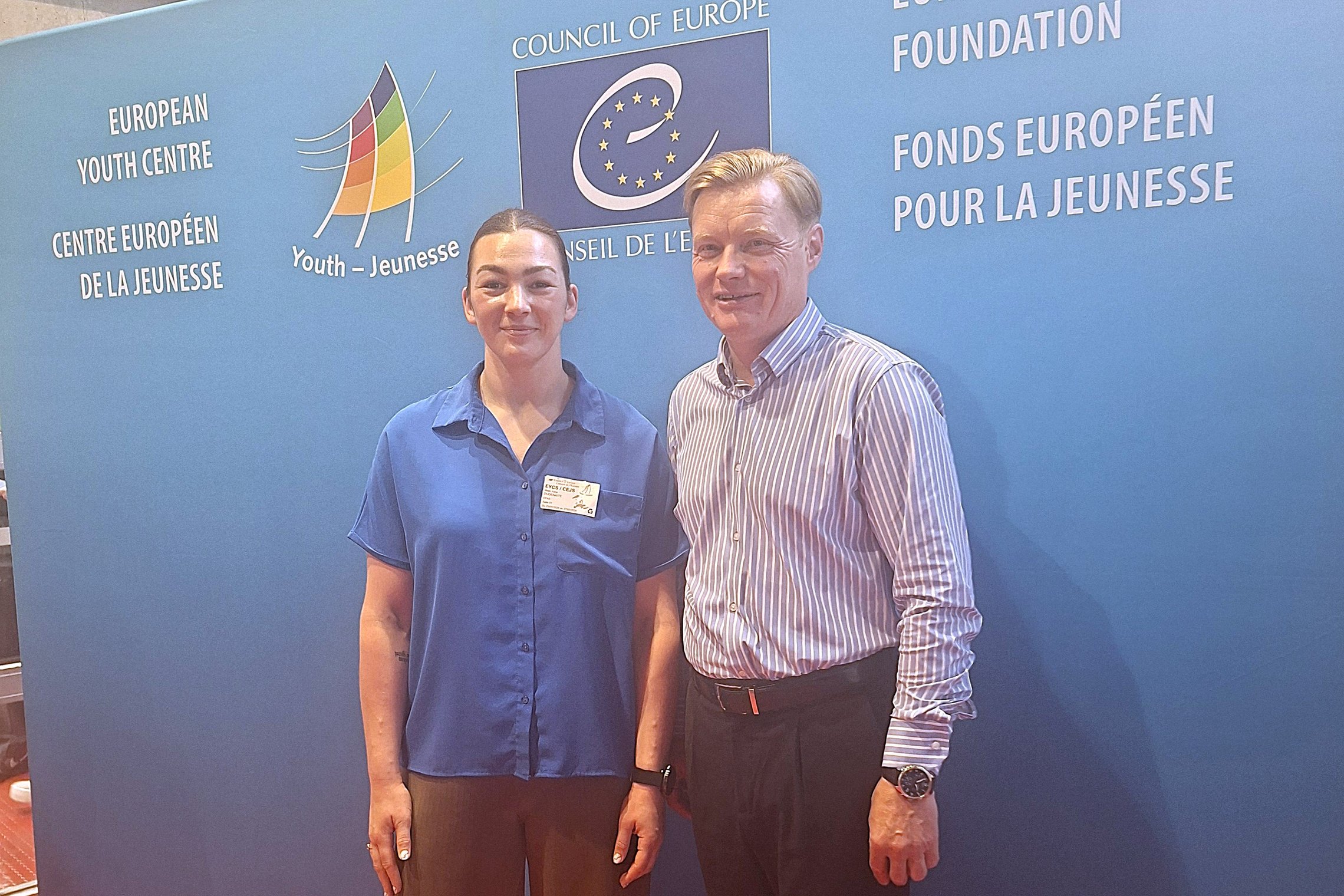
The Governing Board and the Consultative Committee of the Enlarged Partial Agreement on Sport (EPAS) of the Council of Europe (COE) held a joint meeting in Strasbourg on 27 and 28 May to discuss the implementation of a youth perspective in sport policy and preparations for the 19th Council of Europe Conference of Ministers Responsible for Sport to be held in Monaco on 3-4 November, the international solidarity with Ukraine, application of artificial intelligence in sport, as well as strategies and projects related to sports governance, gender equality, safety and inclusion. The meeting was attended by Giedrius Grybauskas, Vice-Minister of Education, Science and Sport.
At the EPAS’ joint plenary session, youth representatives delegated by EPAS member states and the Consultative Committee presented proposals for the 19th Council of Europe Conference of Ministers Responsible for Sport under the title “Safer and Healthier Sport for All Children”, which will be aimed at fostering a values-based, inclusive sporting environment, free from violence and discrimination. Lithuania delegated Miglė Julija Dudėnaitė, a 27-year-old judo athlete and an active member of the National Association of Athletes.
Youth representatives pointed out that ensuring safe sport must become a common practice, with each sports federation or local sports club having a code of ethics and coaches and volunteers being properly trained. Youth representatives proposed to establish a permanent advisory committee for the issues of safe environment for children in sport, a best practices bank and an AI-based monitoring system, and highlighted the importance of a reliable and continuous funding (especially for sport for people with disabilities) and the need for sport organisations to have laid down standards and indicators for safe sport environment.
Artificial intelligence in sport and sport in emergency situations
The meeting discussions extended to the implementation of the EPAS Strategy 2026-2027, which is aimed at increasing access to sport, implementation the European Sports Charter, and strengthening of human rights and good governance, and there was a presentation of findings of the joint EU-COE project All In Plus that revealed persistent gender inequalities in sports leadership, coaches’ work and media. EPAS has committed to continue its work in this area, organise thematic symposia and encourage Member States to review their gender equality policy guidelines and action plans.
EPAS members discussed how artificial intelligence (AI) can optimise the performance of the sports ecosystem, from automating routine administrative tasks to preventing injuries and increasing fan engagement in professional sport. However, it was noted that fragmented data, gaps in digital literacy, high costs, ethical and personal data privacy issues hinder the successful integration of technology.
At the meeting, a new proposed EPAS action line “Sport under Emergency Conditions” (2026-2027), aimed at supporting the continuity, accessibility and resilience of sport in communities in times of crisis, was presented. Drawing on the tragic experience of Member States, in particular Ukraine since 2022, the project aims to develop a legal and political position that protects sport and its infrastructure as a public good. Delegations welcomed this new action line – legal analysis and preparatory work – and considered the possibility of funding the activities through an existing joint project with the EU.
Lithuania supports Ukraine in the face of Russia’s aggression and approved the action line “Sport in Emergency Situations”. However, we pointed out that sport policy must not only respond to crises, but also help to prevent them.
EPAS unites 41 European member states, plus Morocco and Israel. EPAS activities include coordinating sports policy, promoting good governance in sport, fighting doping and match-fixing, preventing discrimination and strengthening safe, fair and inclusive sport across Europe.
Photo: Vice-Minister G. Grybauskas and M.J. Dudėnaitė. Photo by the Ministry of Education, Science and Sport.
Last updated: 09-06-2026
Related news:
Lithuania presented the priorities of Lithuania’s Presidency of the European Schools system at CULT