

EU Sports Council: focus on sustainable tourism, mental health and concerns about easing bans on aggressors
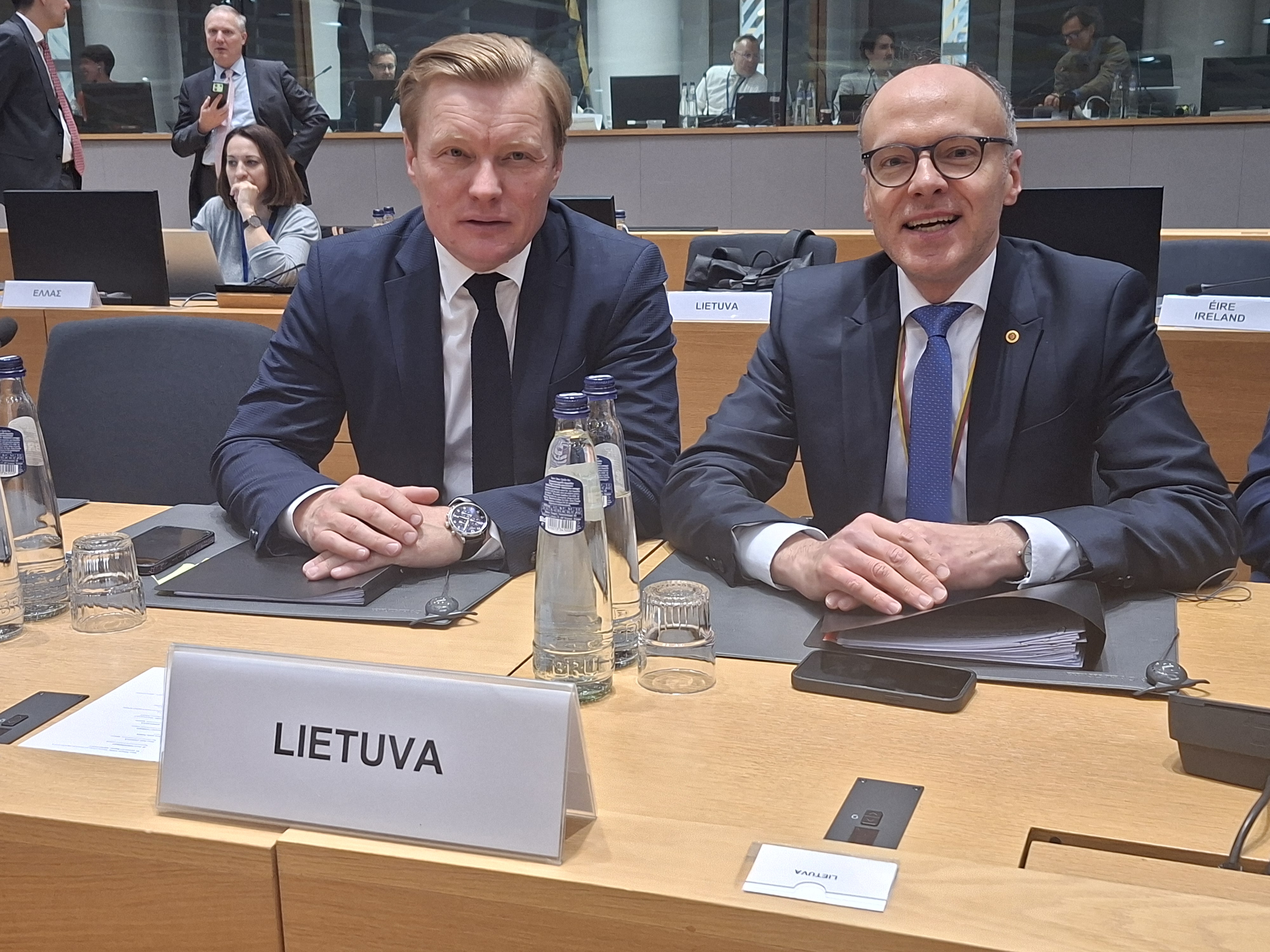
On 12 May, at the European Union (EU) Sports Council meeting in Brussels, politicians from Member States approved new guidelines for the sport tourism sector and discussed the need to strengthen the emotional well-being of athletes.
At a Council meeting, representatives of Member States approved the Council conclusions on sport tourism as a tool for sustainable development. Member States agreed to integrate sport tourism into their common policies, ensuring that sport, tourism and sustainability strategies work together. Furthermore, diversification of sport tourism offer should be aimed at by promoting less-known destinations, reducing seasonality and avoiding negative environmental impacts.
Giedrius Grybauskas, Vice-Minister of Education, Science and Sport, who represented Lithuania at the discussion of political authorities responsible for EU sports under the title “Mental health in sport: from individual resilience to system responsibility”, stressed that mental health in the sporting environment is directly dependent on the system approach.
“A healthy and safe sporting environment starts with a clear message: every athlete is important to us as a human being, not just as a medal and performance generating unit. Support, advice, education and timely response to violations of athletes’ rights must become a daily standard”, the Vice-Minister noted at the discussion.
He presented the mechanisms already in place in Lithuania: the institute of athletes’ representative, which has been operational from 2025, and the possibility for young athletes to contact the Office of the Ombudsperson for Child’s Rights or use the specialised telephone lines established by the Ministry of Health.
The Vice-Minister, who presented Lithuania’s position, emphasised the role of coaches in developing and maintaining a safe environment. The Vice-Minister stressed that coaches need to be adequately prepared for this responsibility, which is why Lithuania is strengthening the psychological competences of coaches through qualification development programmes and development of sport psychology studies.
Support for measuring the impact of sport
As to other issues, Lithuania welcomed the Lipica Conclusions “Measuring the Impact of Sport: from Economic to Social Perspectives”, which were presented by the Slovenian delegation following the Lipica meeting held on 22-24 February 2026. The Conclusions underline that the economic, social, health, employment, education and community benefits generated by sport should be measured more systematically and taken into account in public policy and investment decisions at European Union level and in Member States. Austria, Belgium, Greece, Spain, Italy, Croatia, Poland, Portugal and Germany also supported this issue and expressed the need for adequate data on the impact of sport.
Common position on Russian and Belarusian athletes in international competitions
Lithuania shared Poland’s concerns about the relaxation of rules by international sports federations, which allow Russian and Belarusian athletes to compete with their national symbols more and more often. Belgium, Italy, Croatia, the Netherlands, Portugal, Germany, Estonia, Latvia, France, Romania, Finland and Sweden also supported the statement. According to these countries, such decisions contribute to the normalisation of Russia’s aggression against Ukraine and create serious political, organisational and public security problems for EU countries when organising international sports competitions.
Photo by the Ministry of Education, Science and Sport.
Last updated: 20-05-2026
Related news:
Lithuania presented the priorities of Lithuania’s Presidency of the European Schools system at CULT