

International study reveals a picture of the Lithuanian teacher community: teachers have good perceptions of their pedagogical preparedness, confidence in their skills
Lithuanian teachers have a high level of confidence in their pedagogical skills and resourcefulness in working with students with different needs. Most of them are satisfied with their teacher’s work and conditions, and have confidence in their teaching talent: their ability to use digital tools and different teaching methods. Lithuania stands out from other countries in that 99% of teachers have a higher education degree (OECD average: 95%). However, Lithuania is one of the countries with the teacher population of older age and a predominance of female teachers, as in neighbouring Latvia.
This is the general picture of the Lithuanian teacher that emerges from the OECD’s TALIS 2024, international teacher survey. The TALIS survey is based solely on the opinions expressed by the participants in the survey, reflecting their views.
TALIS, the Teaching and Learning International Survey, is the only international survey that deals with the teachers’ working environment, attitudes and perceptions towards teaching and the teaching profession, and various aspects of working conditions in schools.
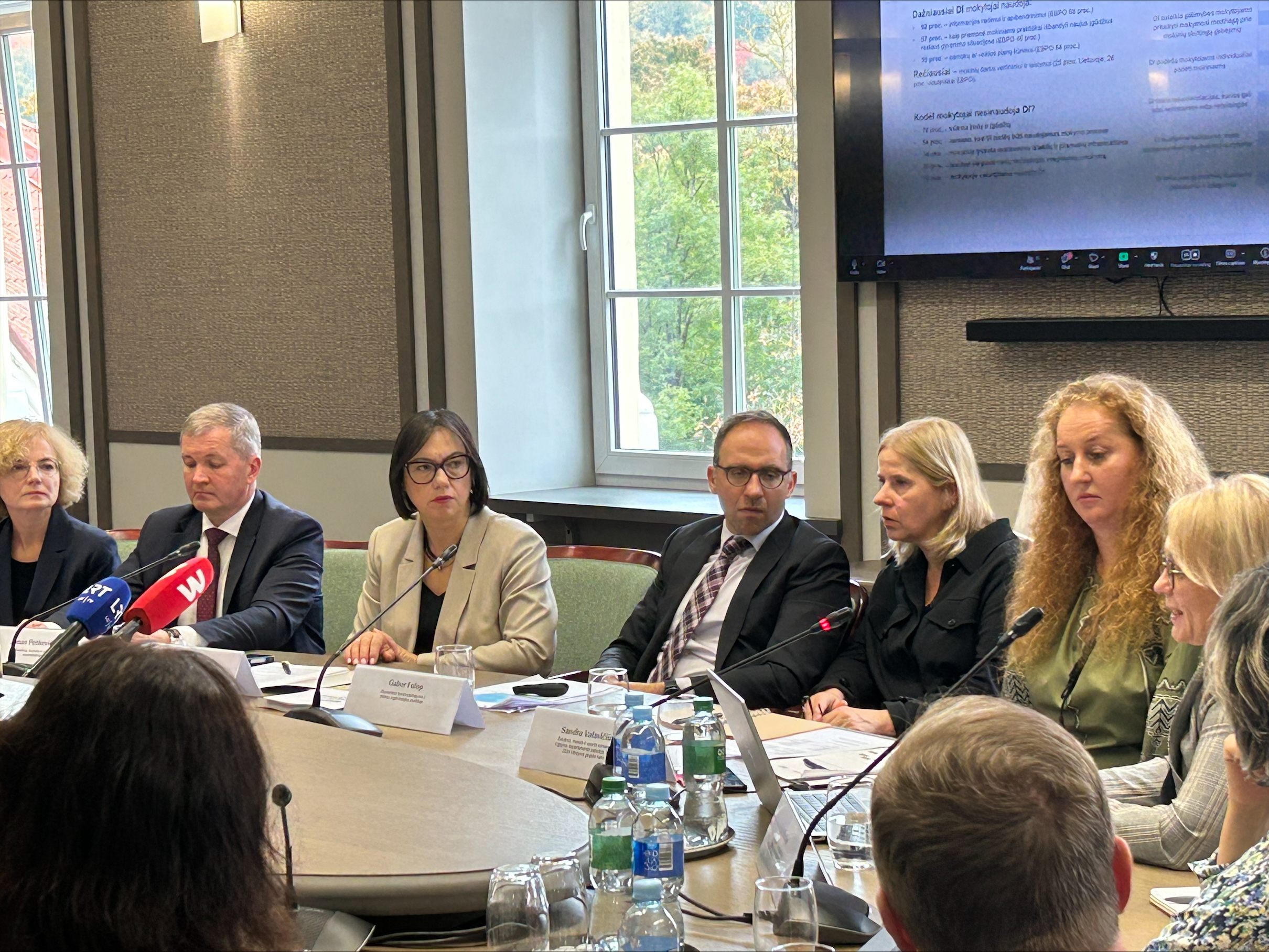
“TALIS is also known as the “voices of teachers” survey as it is aimed at hearing the opinions of teachers and principals on a wide range of issues related to development and education in general. How to attract teachers to schools is a key issue for us. We see an increase in the number of people choosing to study pedagogics, but not all of them go to school. The Ministry of Education, Science and Sport has a group of experts working on issues related to teacher training, attraction and retention in schools, and is looking for long-term solutions to the problem. Several ideas have been put forward – expanding the offer of pedagogical studies in the regions, providing opportunities for earlier entry into the labour market, making it easier for students to start working as teachers, simplifying the requirements for employment, and adjusting the regulations on teacher certification to make it easier for highly qualified specialists – those with a master’s or doctorate degree - to become teachers. The Task Force will formulate the final proposals and provide directions for the way forward,” Minister Raminta Popovienė said at the presentation of the survey.
Working environment
The survey of the working environment revealed that as many as 60% of teachers in Lithuania work in schools that have refugee children. In the last TALIS survey, the figure for 2018 was 2.2% (OECD average for 2024 is 47%). The biggest reason for this spike is probably the war in Ukraine.
38% of Lithuanian teachers work in schools where more than 10% of pupils have special educational needs. (OECD average: 45%). 7% of teachers teach in settings with more than 30% of pupils from low-economic status families (OECD average: 21%).
79-90% of Lithuanian teachers say they often focus on developing students’ social-emotional competences in the classroom. In other countries, their colleagues are less likely to do so (68-84%). 79% of our country’s educators report confidence in their ability to develop these competences (the OECD average is similar at 73%).
The average weekly workload for Lithuanian teachers is around 40 hours (OECD: 40.8 hours). 77% of Lithuanian teachers say they are satisfied with working conditions. In OECD countries, an average of
68% of their colleagues reported the same. 85% of teachers said they were generally satisfied with their work in schools, very similar to the OECD average.
More focus on novice teachers
Lithuanian teachers are satisfied with the quality of their pedagogical studies. 79% of teachers believe that the quality of their pedagogical studies was high, and 73% of recent graduates reported the same. In OECD countries, on average 75% of teachers could state this.
Schools have also started to focus more on novice teachers. In Lithuania, mentoring for young teachers has increased by 17 percentage points compared to TALIS 2018 data. Participation of novice teachers in introductory formal and non-formal training has also increased by 35 percentage points, with 59% of those who have recently started their teaching career participating (OECD average: 72%).
The majority of teachers – 94% – reported that they are able to deliver quality education and are good at using a variety of teaching methods in the classroom (OECD: 84%). Over 60% of the teachers surveyed said they were able to motivate their students, create tasks for children with special educational needs, and cooperate with each other. These skills of Lithuanian teachers are almost identical to the OECD average.
The areas Lithuanian teachers would most like to improve are: curriculum knowledge, education of children with special educational needs, assessment of pupils’ achievements, development of pupils’ socio-emotional competences, AI and other technologies. By the way, 80% of the Lithuanian teachers rate their ability to use digital tools as good (OECD average: 70% and above). 39% of teachers reported using AI (OECD average: 36%).
Most Lithuanian teachers agree that their schools provide the conditions for a creative, friendly and collaborative working atmosphere. In Lithuania, more teachers (91%) said
that their schools promote initiatives (OECD average: 82%). Teachers also often take the lead, initiating collaborative activities themselves. 84% of teachers say they can trust each other (OECD: 86%) and get on well with school administration, students and their parents. 75% of teachers think that they are rated highly by their students (OECD: 71%). 72% feel the same way about the parents of the students (the OECD average drops to 65%).
99% of Lithuanian teachers surveyed like the subject they teach and 92% feel happy being a teacher.
The survey also revealed areas where we need to give a greater focus
However, the Lithuanian teacher community faces challenges. In Lithuania, it is one of the most “feminine” professions, with women accounting for 85% of all teachers (OECD: 70%). The average age of working teachers in Lithuania is 51 years (OECD: 45 years).
Teachers are also challenged by increasing requirements for them as more and more children with different needs, sometimes not even speaking Lithuanian, appear in their classrooms: refugees, returnees from abroad, those with special educational needs, or those lacking social and emotional skills. There is a lack of teamwork and limited teacher collaboration: in Lithuania, the share of teachers who co-teach in the same class at least once a month is barely more than 10%, compared to the OECD indicator of over 30%. Teachers also feel a strong sense of responsibility for the achievements of their students (73%).
The analysts who summarised the findings of the survey suggest more focus on the practice of novice teachers, expanding mentoring experiences and teacher autonomy, and further increasing salaries.
The TALIS survey covered 55 countries. In Lithuania, more than 4,000 teachers and more than 200 principals took part in the TALIS 2024 survey. The survey was carried out in schools between February and March 2024.