

Lithuania at EU Competitiveness Council: clear and credible implementation is essential for ambitious European Horizon
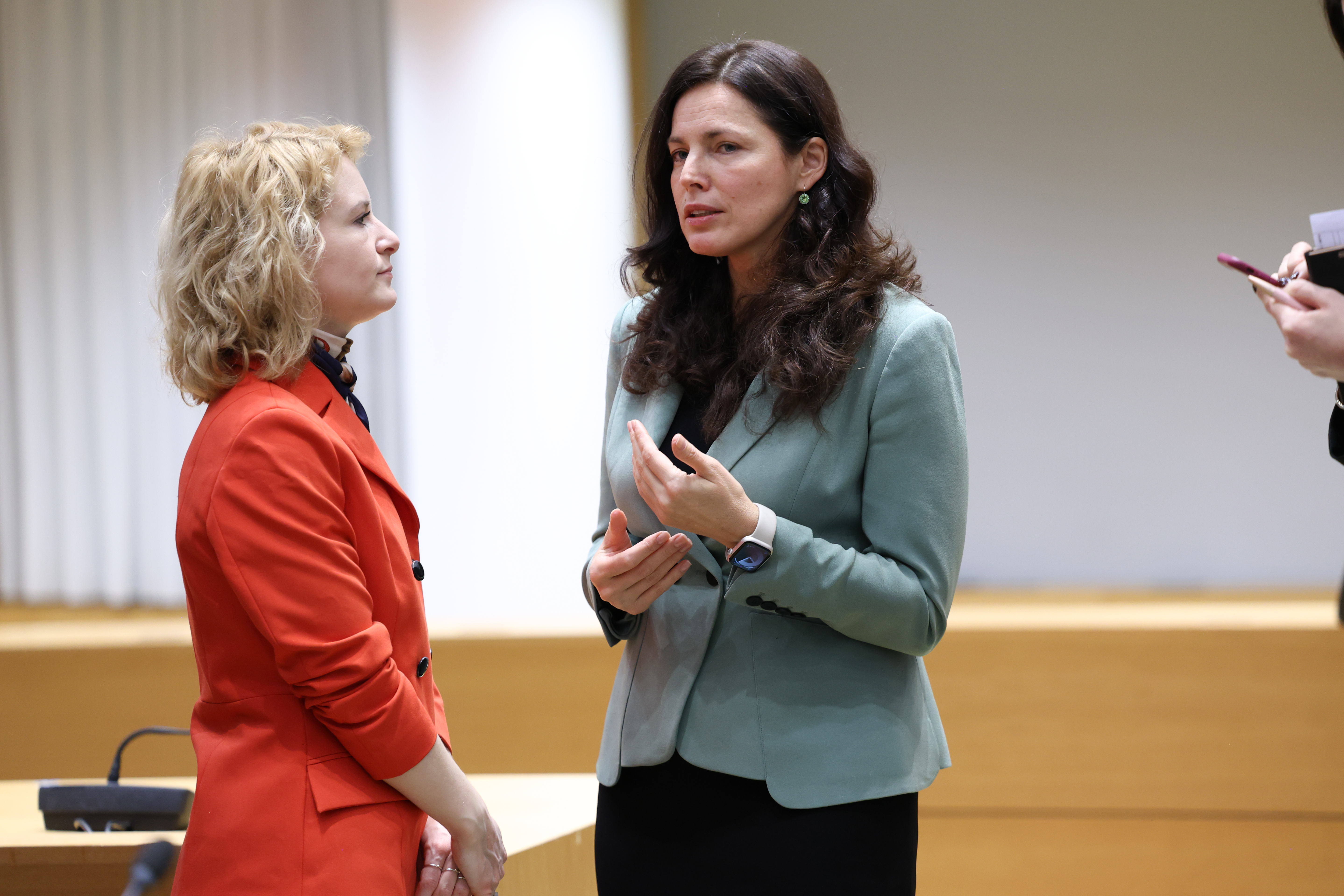
At last week's meeting of the EU Competitiveness Council, Member States reached a consensus on the Research Fund for Coal and Steel. This decision will allow continued investment in the modernisation, innovation and decarbonisation of the sector, strengthening its competitiveness in Europe. There was also a political debate on the multiannual financial framework (MFF) package for the European Horizon programme.
Lithuania was represented at the Council by Deputy Minister for Education, Science and Sport Regina Valutytė. The deputy minister stressed that Lithuania is firmly committed to a strong and ambitious future Framework Programme, which would strengthen the excellence, competitiveness and resilience of European science. However, the main challenge today was the need for greater strategic and operational clarity.
"In order to reach a partial common approach, there needs to be sufficient transparency on how the new European Horizon will work in practice. While we are seeing progress in defining the key pillars and principles, the essential elements are still unclear," the deputy minister noted.
Lithuania, together with other Member States, supported the discussion initiated by Spain on the priority-setting mechanism (AOB point) and stressed the need for a clearly articulated framework for setting strategic priorities and a transparent governance structure, in particular as regards interaction with the European Competitiveness Fund (ECF).
Lithuania has identified a number of key issues where greater clarity is needed:
· how to ensure that European partnerships remain the technology incubators of the future;
· how the added value of the new investment model in research and technology infrastructures will be justified;
· how the programme will address the issues previously raised by Member States on the principle of "dual use by default", while maintaining cooperation with the associated countries;
· how the effectiveness of widening measures will be ensured along with their ability to bridge the long-term innovation gap.
The deputy minister stressed that the lack of clarity not undermines simplification, but also fails to enhance Member States' flexibility. Moreover, uncertainty does not just stay in Brussels - it directly affects the national level.
"For a smooth and efficient implementation from day one, we need to align national systems with the new programme in time, plan for synergies with the Structural Funds, strengthen the capacity of National Agencies where necessary and update procedures. Clarity and stability mobilise stakeholders, send strong investment signals and strengthen Europe's attractiveness", said Ms Valutytė.
Lithuania stressed that a strong common framework must be based not only on a vision, but also on a credible, clear and effective implementation model.
Photo from the EU Council
Last updated: 10-03-2026
Related news:
Lithuania presented the priorities of Lithuania’s Presidency of the European Schools system at CULT