

MESS continues discussions with CERN on Lithuania’s full membership in this organisation
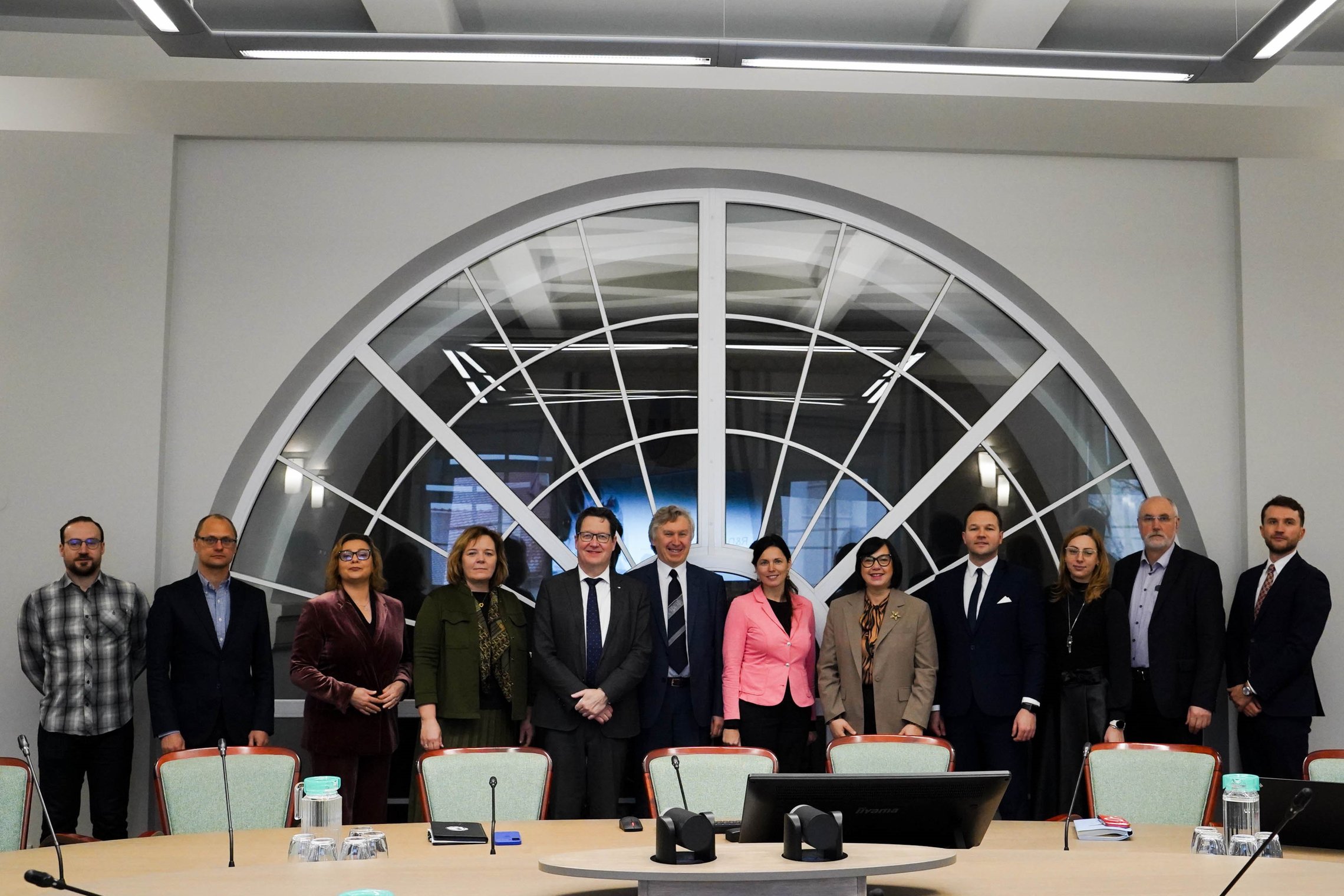
On 14 January, the Ministry of Education, Science and Sport (MESS) received Christoph Schaefer and Maxim Titov, representatives of the European Organisation for Nuclear Research (CERN). The meeting discussed Lithuania’s opportunities to become a full member of CERN and further cooperation of the two parties.
Minister Raminta Popovienė stressed that Lithuania was committed to discussed the question of CERN full membership in the future and, therefore, found it important to continue active cooperation not only with representatives but also with partners of CERN in Lithuania, among them science and study institutions and public and private sector representatives.
Regina Valutytė, Vice-Minister for Science and Studies, was pleased with the opportunities offered to Lithuania as an associate member of CERN to draw on this organisation’s good practice and means for increasing the attractiveness of physics and other STEM subjects, and separate programmes for schoolchildren and teachers.
The CERN representatives noted that Lithuania had excellent prospects for a broader involvement in CERN activities. The Organisation was ready to support Lithuania in every step and help it to refine the country’s strategy for accession.
The guests particularly expected wider cooperation with Lithuania’s laser sector and were also interested in the country’s science ecosystem, membership in other international science organisations and programmes, opportunities for attracting young researchers, state investments in science and innovation, and cooperation between science and business.
Full membership in CERN would open wider ways for Lithuanian businesses, as at present CERN is planning large infrastructure projects, which will entail a particularly great number of orders to businesses for their implementation.
Lithuanian has a long experience of cooperation with CERN, and it has been an associate member of CERN since 2018. The country has made targeted efforts and allocated significant funds for enhancing the potential of particle physics and related topics. Having evaluated the progress of Lithuania’s five-year membership in CERN, in 2023 CERN experts noted that the country was on the right track towards full membership.
The state funding for research and development has increased annually, with more than EUR 425 mln. (0.53% of GDP) being earmarked for this purpose in 2025.
Last updated: 11-02-2025
Related news:
Lithuania presented the priorities of Lithuania’s Presidency of the European Schools system at CULT