

Results of the Horizon Europe research programme presented: Lithuania has made an enormous leap forward
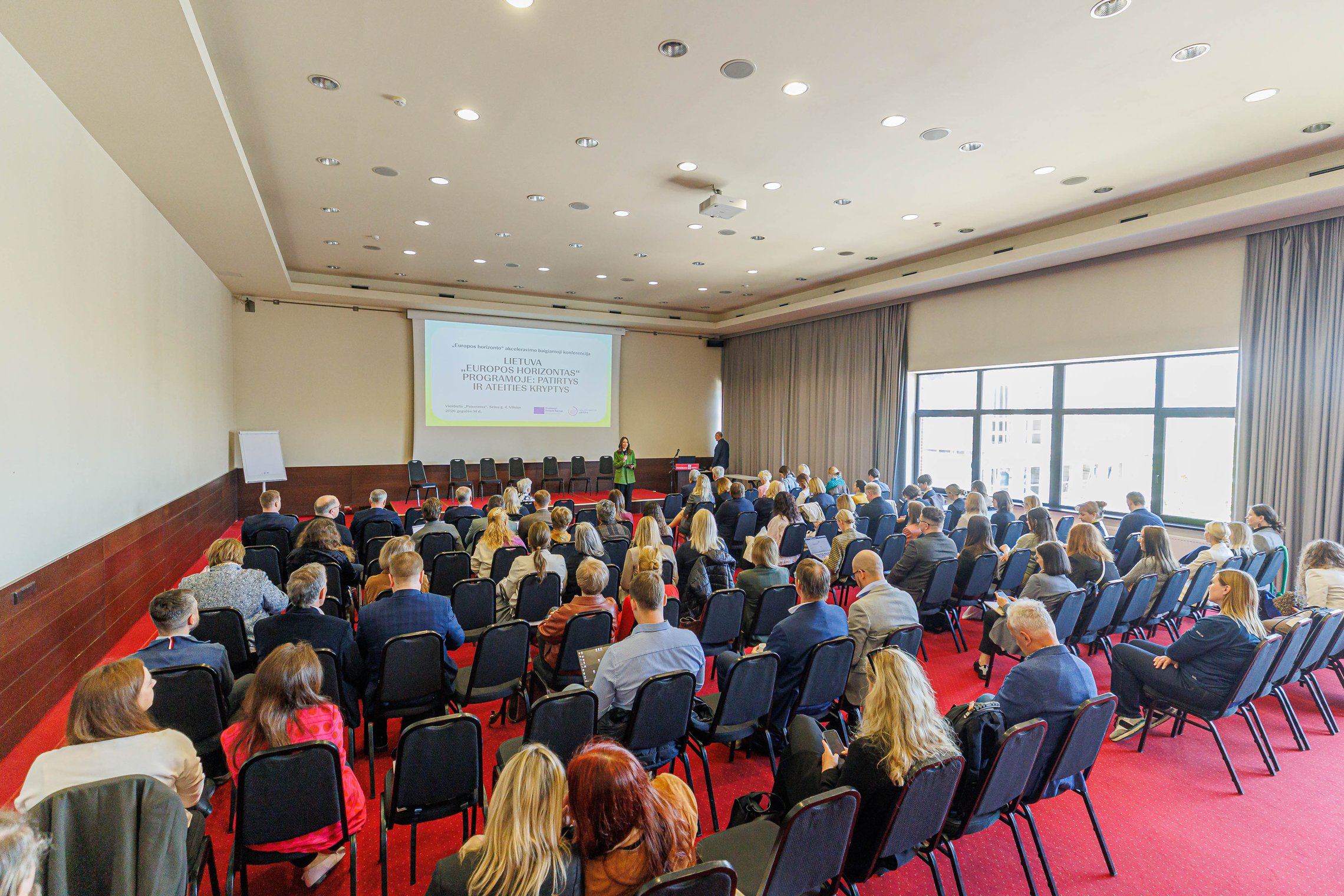
On 14 May 2026, the Ministry of Education, Science and Sport organised the final conference on Accelerator for Horizon Europe under the tile “Lithuania in the Horizon Europe programme: experiences and projections into the future“.
In the 5 years of Lithuania’s participation in the EU’s Framework Programme for Research and Innovation “Horizon Europe”, its grants received from the European Commission almost doubled to the amount of nearly €200 million, compared to the entire 7-year period of the previous Horizon 2020 programme. The positive change achieved by Lithuania amounts to as much as €100 million, which made the position of Lithuania ranking fourth among the EU countries that have made the biggest progress, with Belgium (€465 million), Greece (€222 million) and the Czech Republic (€104 million) being ahead of Lithuania in this respect only.
These and other achievements of Lithuania were presented at the final conference on the Horizon Europe Accelerator, “Lithuania in the European Horizon programme: experiences and projections into the future’, which was organised by the Ministry of Education, Science and Sport.
During the conference, the science and business community also discussed national priorities in the field of science, the impacts of the acceleration initiatives launched by the Ministry of Education, Science and Sport for the Horizon Europe programme, the directions for FP10, the next EU Framework Programme for Research and Innovation, etc.
Lithuania among the countries that have made the biggest progress
To compare the current Horizon Europe programme and the former Horizon 2020 programme, Lithuania is one of the leading EU countries in terms of the change in grants awarded by the European Commission. The European Commission allocated €94 million to Lithuanian projects over the entire Horizon 2020 period, and nearly €200 million over the yet-to-be-completed Horizon Europe period.
The participation of SMEs in the Horizon Europe programme has increased significantly. Compared to the Horizon 2020 period, SMEs in the current programme have been involved in 43 more projects (181 projects in total) and have won almost €33 million more in European Commission grants (€62.5 million in total).
Nearly €40 million for the acceleration of the Horizon Europe
In Lithuania, the Horizon Europe Accelerator, the additional support to encourage science and business to participate in the research programme, was launched in 2023. This support, almost €40 million, has contributed significantly to Lithuania’s improving performance.
A network of national contact points for the European Horizon programme was set up in Lithuania to inform and advise applicants on the programme’s calls for proposals and to help them find partners. Science and innovation advisers have also been deployed in the Government Office and ministries to help ministries make science-based decisions and bring science closer to the public sector.
Support was awarded to projects that implemented activities in line with the European Research Area priorities. Co-funding was also provided for Horizon Europe projects by Lithuanian applicants, which needed institutional co-financing.
Funding for projects for the membership and operation in international networks for science and associated business structures, and for science and SME projects awarded the European Commission’s Quality Label has been provided.
Support extended to capacity building for science and business in drafting international project applications, and to individual science and business consultancy. Start-up R&D projects intended for testing a scientific idea before applying to the Horizon Europe, and projects by research and study institutions for purchasing laboratory or other scientific equipment, have also been funded.
The Horizon Europe Accelerator is funded under the Recovery and Resilience Facility Plan “Next Generation Lithuania”.
Lithuania was also the first EU country to transfer funds from the EU funds investment programme 2021-2027 to the Horizon Europe programme. The €18.5 million transferred is intended to increase the participation of the country’s researchers and businesses in international projects, to increase their visibility and international recognition, and to promote the accessibility of the Horizon Europe programme.
R&D funding triples
Lithuania’s research and development (R&D) sector has been consistently strengthened. In 2026, public funding for R&D amounts to €493 million (0.55% of GDP). R&D funding, which was standing at €159 million in 2021 (0.28% of GDP), has more than tripled over the 5-year period.
Public funding for R&D is expected to reach 1% of GDP and to amount over €1 billion by 2030. This ambition is enshrined in the Agreement on National Education Policy by the parliamentary parties.
Researchers’ salaries are also rising year on year. Since January this year, the salaries of staff in research and higher education institutions have been increased by a further 8.41% on average. The aim is that the average salary of research staff, other researchers and lecturers in research and higher education institutions in 2030 should be at least €4.85 thousand.
Increasing public funding for the R&D sector and for researchers’ salaries is leading to better results in the Horizon Europe programme: Lithuanian researchers submit more applications and are equal partners in international consortia; better national indicators enable them to raise more funding from the Horizon Europe projects.
Last updated: 26-05-2026
Related news:
Lithuania presented the priorities of Lithuania’s Presidency of the European Schools system at CULT