

The new school year upon us: extra money for textbooks, higher salaries for teachers and researchers, proposals on examinations
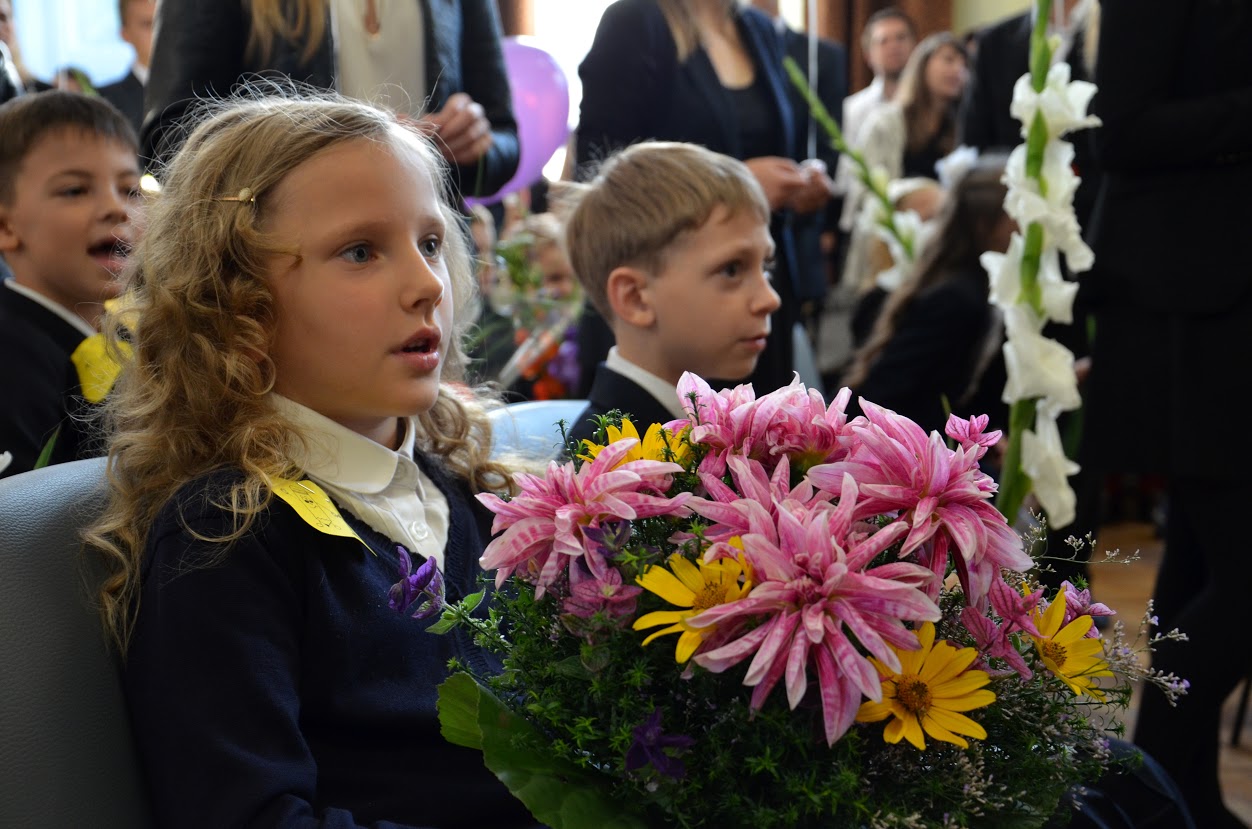
As the new school year approaches, representatives of the education community and municipalities gathered for a pre-September conference to discuss the state of education and the priorities for the new school year: emotional security, provision of educational resources, and the alignment of the examination system.
“Before new school years, education communities have got used to to expecting news about innovations, reforms and changes. But at the same time, teachers, pupils and parents are tired of this. My goal is to complete the clean-up of the consequences of the reforms carried out in the past,” said Raminta Popovienė, Acting Minister of Education, Science and Sport.
As the Minister stressed, special focus will be on emotional security. Before the new school year, schools will receive expert guidance for classroom teachers on the role of the classroom teacher in creating a safe, supportive classroom environment, especially on what should be discussed in the first lessons: classroom rules, agreements, creating a classroom climate, bullying prevention. A cooperation agreement with the Ministry of Health on strengthening emotional well-being in schools is also planned for September.
Salary increases from September
As of 1 September, teachers’ salary coefficients will increase by 8%. From September 1st, salaries for lecturers, researchers and non-academic staff will also increase by 8% on average.
Given that not all new textbooks or other methodological materials will be published in the new school year, and that not all schools are equally provided, the additional payment for teachers working under the updated general education curricula has also been extended until the end of August 2027. An increased salary coefficient for complexity of activities or for longer preparation time was granted from September 2024 and such provision was due to expire in September this year. The average increase in salary due to the complexity of the activity is 5.9%.
As of 1 September, more money will be allocated for primary education. There will be fewer contact hours per post of primary teacher (currently, funding is calculated at 799 hours per post, but it will be 756 hours from the next school year). More than €14 million is earmarked for this commitment from September 2025. The total number of hours per post will remain the same, with fewer contact hours and more non-contact ones.
10 million extra for new textbooks
In 2025, €25 million from the state budget has been allocated for the purchase of textbooks. An additional €10 million will be made available this year to help schools buy more of the textbooks they need. The extra money will enable schools to buy textbooks for the whole of the next school year.
In 2023 and 2024, 130 textbooks based on the updated curricula were released by publishers. Publishers have published 34 of the planned textbooks this year, with 9 more to be published by the end of the year and 19 textbooks in 2026.
More than 16,000 laptops will reach schools at the start of the school year, by October. They have been bought and will be handed over to schools by the National Agency for Education.
Revision of the pass mark for the national matura examinations
Minister Raminta Popovienė presented the most important activities planned by the Ministry for this school year.
One of the hottest topics is the national matura examinations. In the autumn, a team of experts will carry out a detailed analysis of the exam tasks and marking to find out why school-leavers had difficulties in completing one or another task. On this basis, guidance will be produced on how to improve pupils’ preparation for the exams. The development of a database of exam tasks is planned for several years ahead, so that tasks can be validated in advance and errors or ambiguities in the tasks are avoided. The National Agency for Education has already signed a cooperation agreement on the development of a task base for the national matriculation exams with foreign partners.
“As we have said many times before, we will review the general curricula with the engagement of groups of education experts and make some adjustments where possible, by correcting inaccuracies, perhaps narrowing down some topics without destroying the overall structure of the curricula, so that we do not have to modify the textbooks that have just been prepared. The National Agency for Education has already set up a curriculum review working group, which is awaiting proposals from subject teachers’ associations on curriculum adjustments,” the Minister said.
In September, the Ministry will submit a proposal to revise the pass mark for the national matriculation exams, as this year’s actual results showed that the theoretically modelled and set examination pass mark of 35 points was too high.
A proposal on how to deal with the organisation of examinations during school holidays
As the Minister pointed out, the problem of busy Junes in schools has already been tackled: the next school year will end a week earlier for pupils in 5th to 10th grades.
The Ministry has also developed a proposal on how to deal with the organisation of examinations during school holidays. It is proposed that pupils in grades 1 to 10 should have their spring break until Easter, during which time gymnasium students in grades III and IV could do the scheduled parts of the Lithuanian language and literature and the foreign language speaking. Gymnasium students in grades III to IV would have a holiday after Easter and would be given the opportunity to have a good rest.
The mathematics exam will be decided on together with the community
“This school year, we will agree on the compulsory maths matriculation exam, which is a very sensitive issue for the education community. I would like to stress that I am certainly not going to adopt one-person, uninformed decisions on the exam in mathematics. Until the agreements reached can be put into practice, we will propose that in 2026, pupils who fail the mathematics exam will be able to retake it again in a second session”, the Minister said.
Until now, pupils could only retake the Lithuanian language and literature exam if they failed it, as it is the only compulsory exam for leaving school.
Another goal for the coming year is to ensure smooth registration of pupils for examinations. III and IV year gymnasium students will be enabled to check for themselves which exams and which session they have been registered for by the school.
Town gymnasiums preserved this year
Minister Popovienė presented the results of the work and decisions taken earlier in the term.
“We can already rejoice at the results of the decisions we have made: the preservation of gymnasiums in towns and the increasing number of children choosing extracurricular activities,” the Minister said.
· This year, the government has made it possible to maintain small gymnasiums in towns by forming gymnasium grades III and IV, provided that they have at least 12 pupils and the municipality contributes 50% of the schooling costs. The decision preserved 48 groups of students in gymnasiums in 42 towns.
· One of the first things we did this year, in January, was to increase the funding for children’s non-formal education basket by 25%, from €20 million to €25 million, which has opened up more opportunities for children to take part in their favourite after-school activities. Already in March, compared to a year ago, 12,000 more pupils (121,000 in total) additionally joined clubs.
· After intensive visits to Lithuanian regions and joint discussions between the education community and employers, decisions have been taken on the necessary investments in vocational education and training institutions to help them adapt faster to the changing labour market and to better respond to the needs of the local labour market. In autumn this year, €38 million will be invested to upgrade training equipment in the majority of vocational education and training institutions.
· Particular attention to children’s physical health. For the first time, a national programme to promote physical activity in children will be funded by the national budget. This is a new programme aimed at increasing children’s physical activity and improving the knowledge of professionals working with them. More than €3 million over 4 years is earmarked for the programme. Activities are projected to start in the autumn.
The Ministry of Education has also allocated more than €3 million to municipalities this year for the education and food of pre-school children growing up in families at social risk and for their transport to educational institutions.
More than €800,000 has also been allocated to municipalities for purchasing school buses. School buses are scheduled to be purchased by municipalities by the end of this year.
The Ministry of Education, Science and Sport, together with the Ministry of Health, has drawn up guidelines on the use of mobile phones and other devices by pupils in pre-school and general education schools. In the new school year, educational establishments will adopt procedures for the use of devices. The Ministry is drafting an amendment to the Law on Education, which would legally oblige all general education schools to adopt such procedures, and will submit it for discussion in the autumn.
More detailed information on the 2025-2026 academic year
Photo by KTU Engineering Lyceum
Last updated: 26-09-2025
Related news:
Lithuania presented the priorities of Lithuania’s Presidency of the European Schools system at CULT